Mastering Visual Impact with Advanced PSD 3D Editable Text Effects
In the rapidly evolving landscape of digital design, the ability to create compelling visual assets quickly is a critical skill for professionals and hobbyists alike. Whether you are a marketing manager launching a new campaign, an educator creating engaging course materials, or a print-on-demand entrepreneur designing t-shirts, the quality of your typography can make or break your project. This is where the Advance PSD 3D Editable Text Effect becomes an indispensable tool in the creative workflow. By leveraging the power of Adobe Photoshop's Smart Objects, designers can achieve high-resolution, three-dimensional typography without needing to master complex 3D modeling software or spend hours rendering lighting and shadows manually.
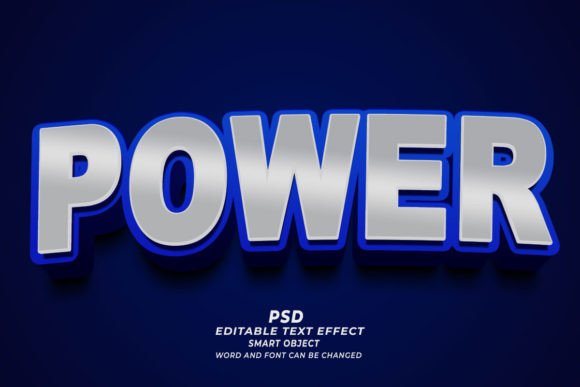
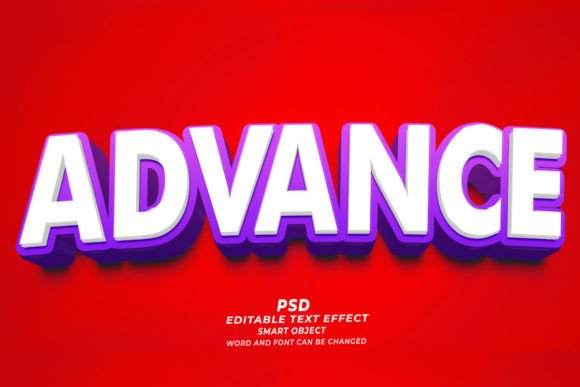
The core value of these advanced templates lies in their accessibility and flexibility. Traditionally, creating realistic 3D text required a deep understanding of extrusion, bevels, lighting rigs, and texture mapping within Photoshop or dedicated 3D suites. However, modern pre-made effects streamline this process. When you utilize an Advance PSD 3D editable text effect with background, you are essentially accessing a pre-engineered environment where the technical heavy lifting has already been completed. The result is a professional-grade asset that allows you to focus on creativity and messaging rather than technical execution.
The Mechanics of Smart Object Integration
At the heart of these editable templates is the Smart Object technology native to Adobe Photoshop. For those unfamiliar with the term, a Smart Object is a layer that preserves an image's source content with all its original characteristics, enabling non-destructive editing. In the context of 3D text effects, the template creator builds a complex hierarchy of layers—including displacement maps, shadow casters, highlight reflectors, and ambient occlusion—and nests them within a specific Smart Object container.
When a user downloads a file labeled as "Easy To edit – Just Click and Edit," the workflow is remarkably simple yet powerful. You simply open the PSD file, locate the designated Smart Object layer (often named "Your Text Here" or similar), and double-click it. This action opens a separate document window where you can type your desired text, adjust the font, change the size, or even paste vector shapes. Upon saving this secondary document, the main composition automatically updates. The sophisticated 3D styling, complete with realistic lighting and depth, wraps around your new input instantly. This mechanism ensures that the PSD Text Effect remains consistent regardless of the characters used, maintaining the integrity of the design while allowing for infinite customization.
Versatility Across Industries and Applications
The utility of high-quality 3D text effects extends far beyond simple graphic design exercises. Because these files are typically delivered at High resolution 300dpi, they are print-ready, making them suitable for a vast array of physical and digital media. Consider the following real-world applications where these tools provide significant value:
- Print on Demand (POD) and Merchandise: Entrepreneurs selling custom apparel on platforms like Redbubble or Printful require designs that pop. A 3D text effect on a t-shirt adds a tactile visual quality that flat text cannot achieve. The ability to quickly swap out phrases for different niches allows sellers to test markets rapidly.
- KDP Book Cover Design: Self-publishing authors on Amazon Kindle Direct Publishing need covers that stand out in a crowded thumbnail view. Bold, dimensional typography often conveys genre and tone more effectively than standard fonts. Using an editable template allows an author to iterate on title placements and font choices without hiring a designer for every tweak.
- Web Banners and Digital Marketing: In the digital realm, attention spans are short. Web banners and social media ads utilizing 3D text tend to have higher click-through rates due to their perceived depth and professionalism. Since these PSDs work with web resolutions as well, marketers can scale the output for various ad sizes while retaining crisp edges.
- Educational and Corporate Presentations: Educators and business leaders often need to emphasize key concepts in slide decks or printed handouts. A well-crafted 3D header can draw the eye to important data points or section titles, enhancing information retention.
Customization Capabilities: Fonts, Colors, and Shapes
One of the most common misconceptions about pre-made effects is that they limit creative freedom. On the contrary, a robust Advance PSD 3D Editable Text Effect is designed to be highly adaptable. While the lighting and structural style are predefined, the variables that define the brand identity remain fully under the user's control.
Font Flexibility: These templates generally support any font installed on your system. Whether you prefer a sleek sans-serif for a tech product or a rugged slab-serif for a construction company, the effect adapts. The Smart Object interprets the vector outlines of the font and applies the 3D extrusion accordingly. This means you are not locked into a specific typeface, allowing for perfect alignment with brand guidelines.
Vector Shapes and Logos: Beyond alphanumeric characters, many advanced templates allow for the insertion of vector shapes or logos. This is particularly useful for creating 3D icons or badge-style graphics. If a business wants their logo to appear as if it is carved from stone or molded from chrome, they can simply replace the text layer with their logo path. The effect treats the shape with the same lighting and depth parameters as it would a letter, ensuring a cohesive look across all branding materials.
Color and Texture Adjustment: While the primary structure is automated, most high-quality PSDs include adjustment layers for hue, saturation, and brightness. This allows a user to take a "gold" text effect and shift it to "rose gold" or "bronze" with a few clicks. Furthermore, because the files are layered, advanced users can dig deeper to modify the texture maps, changing a metal surface to wood or plastic if the project demands it.
Technical Considerations for Optimal Results
To ensure the best possible outcome when using these tools, there are several technical factors to keep in mind. First and foremost is the resolution. Professional print work requires 300dpi to avoid pixelation when viewed up close. Most premium templates adhere to this standard, but it is crucial to verify the document settings before beginning your design. If you are working on a web banner, you may downsample the image to 72dpi or 96dpi later, but starting with a high-resolution canvas gives you the flexibility to repurpose the asset for print later if needed.
Another consideration is the complexity of the text. While Smart Objects are powerful, extremely intricate scripts or very thin fonts may not render the 3D effect as boldly as blockier typefaces. The physics of light and shadow rely on surface area; therefore, thicker fonts often showcase the depth and beveling of the effect more dramatically. Designers should experiment with font weights to find the sweet spot where readability meets visual impact.
Additionally, compatibility is key. These files are built for Adobe Photoshop, and while newer versions of the software offer enhanced features, most templates are backward compatible to a certain extent. However, to utilize the full range of "Click and Edit" functionality, users should ensure they have a relatively recent version of Photoshop installed. Older versions might struggle with newer Smart Object protocols or specific blending modes used in advanced effects.
The Economic and Time-Saving Advantage
From a business perspective, the adoption of editable text effects represents a significant optimization of resources. Hiring a graphic designer to create a custom 3D typography piece from scratch can be costly and time-consuming. The process involves conceptualization, modeling, texturing, lighting, and rendering, which can take hours or even days for a single variation. In contrast, an Advance PSD 3D editable text effect reduces this timeline to minutes.
This efficiency does not imply a sacrifice in quality. Many of these templates are created by senior designers who specialize in photorealistic rendering. By purchasing or downloading these assets, small business owners and independent creators gain access to elite-level design aesthetics at a fraction of the cost. This democratization of high-end design tools allows smaller entities to compete visually with larger corporations, leveling the playing field in marketing and branding.
Furthermore, the reusability of these files adds to their value. A single purchase can yield hundreds of unique designs. A marketing team can create a series of social media posts for a month-long campaign, changing the text daily while maintaining a consistent visual theme. A POD seller can generate dozens of variations for A/B testing. The return on investment is realized through the sheer volume of professional assets one can produce from a single source file.
Future Trends in Editable Design Assets
As design software continues to evolve, so too do the capabilities of these editable templates. We are seeing a trend toward more dynamic integration, where 3D effects respond more intelligently to different character counts and line breaks. Future iterations may include automated perspective adjustments, allowing text to wrap around curved surfaces or fit into specific perspective grids with even greater accuracy.
Moreover, the intersection of AI and PSD templates is an emerging frontier. Imagine a workflow where an AI suggests the optimal font and color combination for your 3D text based on the background image you provide, all within the Smart Object framework. While we are currently in the era of manual "click and edit," the foundation laid by these structured PSD files prepares the industry for more automated, intelligent design assistance.
In conclusion, the Advance PSD 3D Editable Text Effect is more than just a shortcut; it is a strategic asset for anyone involved in visual communication. By combining the aesthetic appeal of three-dimensional typography with the practical ease of Smart Object editing, these tools empower users to produce high-impact designs efficiently. Whether for a book cover, a website header, or a custom t-shirt, the ability to manipulate light, depth, and texture with just a few clicks opens up a world of creative possibilities. As the demand for high-quality visual content continues to rise, mastering these editable resources will remain a vital skill for creators across all sectors.