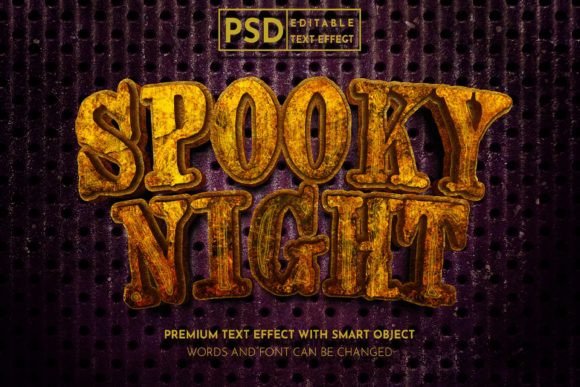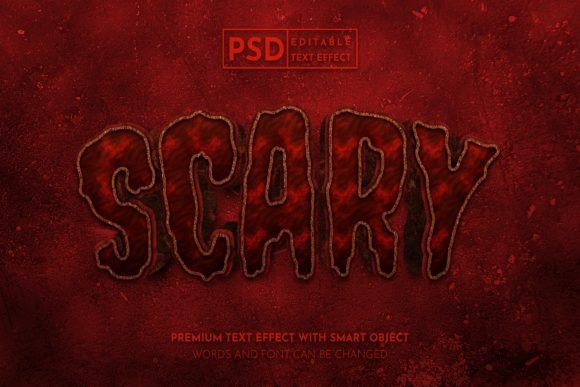
Evaluating the Scary 3D Text Effect for Digital and Print Design
In the realm of graphic design, typography often serves as the primary vehicle for conveying mood and atmosphere. For projects centered around horror themes, Halloween promotions, or thriller entertainment, standard flat text rarely suffices. This is where a Scary 3D Text Effect becomes a critical asset. These specialized design resources allow creators to transform simple lettering into ominous, dimensional structures that evoke fear, tension, or excitement. Whether utilized for web headers, social media campaigns, or physical print materials, understanding the capabilities and limitations of these editable templates is essential for making an informed design decision.
Understanding the Utility of Editable 3D Typography
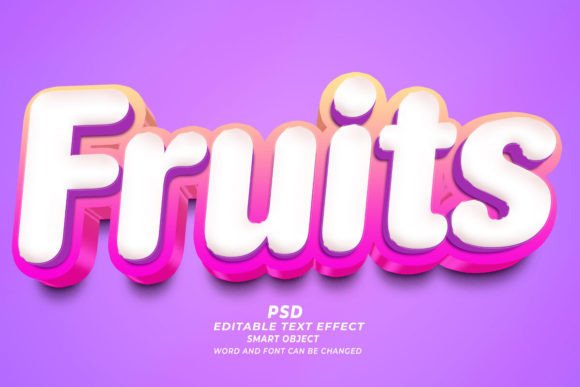
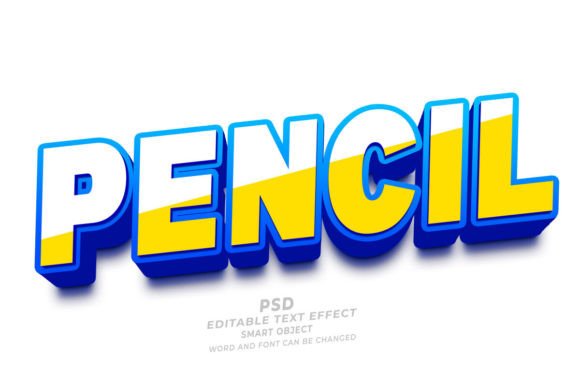
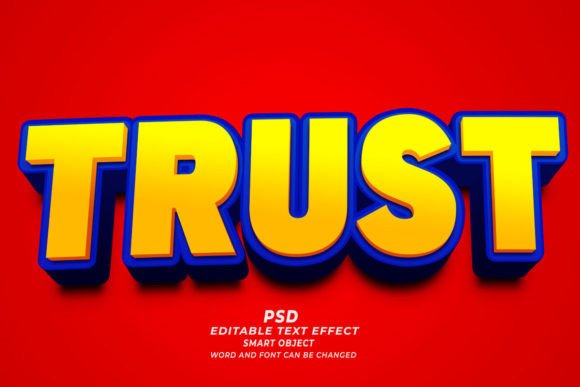
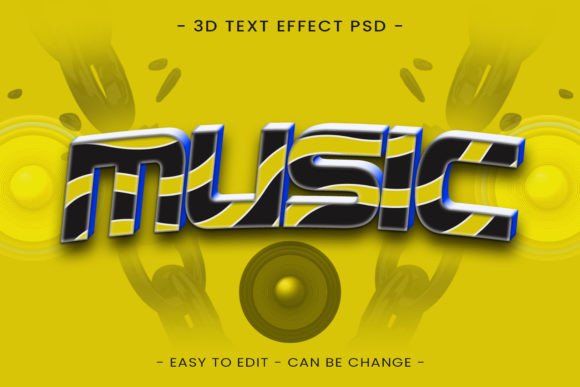
A Scary 3D Text Effect is not merely a static image; in its most useful form, it is a fully layered Photoshop (PSD) file built upon Smart Objects. This technical foundation distinguishes professional-grade templates from basic raster images. The core function of these files is to separate the visual styling—such as lighting, shadows, textures, and depth—from the actual textual content. By leveraging Smart Object technology, designers can double-click a specific layer, paste their own copy, save the file, and instantly see their text rendered with the complex three-dimensional effects pre-applied.
The interest in such tools stems from the significant time investment required to create high-quality 3D typography from scratch. Manually modeling letters, applying displacement maps for texture, and calculating realistic light sources in Adobe Photoshop demands advanced technical skills and hours of work. An editable template democratizes this process, allowing individuals with varying levels of expertise to achieve professional results rapidly. This efficiency is particularly valuable when working under tight deadlines for seasonal events or sudden marketing opportunities.
Key Benefits and Technical Considerations
When evaluating whether to integrate a Scary 3D Text Effect into a workflow, several tangible benefits emerge. The most prominent is ease of use. As noted in the specifications of high-quality templates, the requirement for advanced skill is minimal. The "no skill requirement" aspect refers to the editing process rather than the design quality; the heavy lifting regarding composition and rendering has already been completed by the template creator. Users need only understand how to navigate the Layers panel and utilize Smart Objects.
Furthermore, the organization of these files plays a crucial role in their usability. A well-organized structure, where elements are grouped into logical folders, ensures that users can isolate specific components if minor adjustments are needed beyond the text replacement. High resolution is another non-negotiable feature. For a text effect to be versatile, it must maintain clarity across different mediums. Templates provided in high-resolution formats ensure that the output remains crisp whether it is displayed on a retina screen or printed on large-format posters.
However, there are technical tradeoffs to consider. Most of these mockups and text effects operate in RGB color mode. This is ideal for digital applications, including website headers, Instagram stories, Twitter banners, and Facebook promotions. RGB allows for vibrant, glowing colors that screens can reproduce effectively. However, if the intended application is strictly for professional offset printing (such as magazines or high-end flyers), the designer must be aware that converting RGB to CMYK later may result in a shift in color saturation, particularly with neon or deeply saturated hues often found in scary themes. While many modern printers accept RGB files, purists aiming for precise color matching in print publications should verify the color profile compatibility before finalizing their assets.
Ideal Applications and Use Cases
The versatility of an editable Scary 3D Text Effect makes it a strong fit for a wide array of promotional materials. In the digital sphere, these effects excel in social media promotions. Platforms like Instagram and Facebook rely heavily on visual stopping power; a headline featuring dripping blood textures, cracked stone surfaces, or eerie glowing edges can significantly increase engagement rates compared to plain text. Similarly, for web design, these effects can serve as compelling hero section headers that immediately establish the tone of a landing page for a horror movie, a haunted house event, or a true crime podcast.
Beyond the screen, these templates are highly effective for publication promotion. Event papers, flyers, and posters for Halloween parties or theater productions benefit greatly from the tactile feel of 3D text. When printed, the shadows and highlights embedded in the design can create an illusion of depth that draws the viewer's eye. Magazine covers focusing on seasonal thrillers also utilize these effects to create bold, newsstand-grabbing titles. The inclusion of both PSD and JPG files in the main folder adds to this flexibility, allowing users to implement the effect immediately in a JPEG format for quick previews or social sharing, while retaining the PSD for final, customizable production.
When to Consider Alternatives
While the convenience of a pre-made Scary 3D Text Effect is undeniable, it is not the optimal solution for every scenario. If a brand requires a completely unique typographic identity that cannot be replicated by others, relying on a public template may be counterproductive. Since these files are available for purchase or download by multiple users, there is a possibility that similar designs could appear elsewhere. For long-term branding or logo design where uniqueness is paramount, commissioning a custom 3D illustration or building a proprietary font style may be a better investment.
Additionally, if a project requires specific vector scalability without any loss of quality at infinite sizes, a raster-based Photoshop effect may have limitations compared to vector-based 3D tools like Adobe Illustrator or Cinema 4D. While high-resolution PSDs can be scaled significantly, they are ultimately bound by pixel dimensions. Projects requiring massive billboard scaling or intricate vector path manipulation might necessitate a different approach.
Making the Decision
Ultimately, the decision to use a Scary 3D Text Effect depends on the balance between speed, budget, and uniqueness. For marketers, event organizers, and web designers who need to deploy high-impact visuals quickly, the value proposition is clear. The ability to edit all elements and change text effortlessly removes the barrier of technical complexity. The fully layered nature of these files ensures that users retain control over the final look, even if they are not manipulating the 3D geometry themselves.
For those whose goals align with rapid deployment of thematic content for holidays, events, or social media campaigns, these editable smart object templates offer a pragmatic solution. They bridge the gap between amateur design and professional polish, providing a robust foundation upon which creative ideas can be built without the need for extensive 3D modeling knowledge. By understanding the RGB constraints and the potential for shared aesthetics, designers can strategically employ these tools to enhance their visual storytelling effectively.